
What is it?
The textbook part: what an orientation, a misorientation, an ODF or a tensor is, with the conventions MTEX uses. Every page runs MTEX code, so its examples are checked on every build.
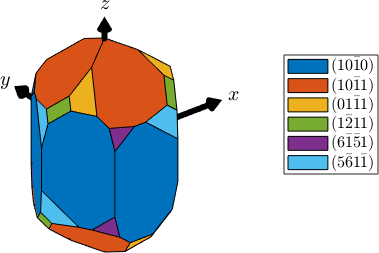
Directions and crystal lattices
Vectors, axes, Miller indices, the lattice metric and crystal reference frames.
7 pages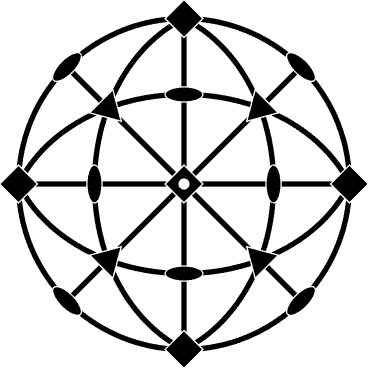
Crystal symmetry
Point groups, Laue groups and fundamental sectors.
3 pages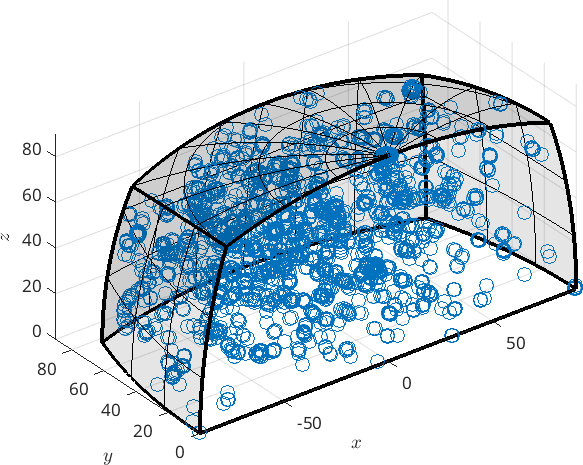
Rotations and orientations
What a rotation and an orientation are, the conventions, symmetry and the fundamental region.
13 pages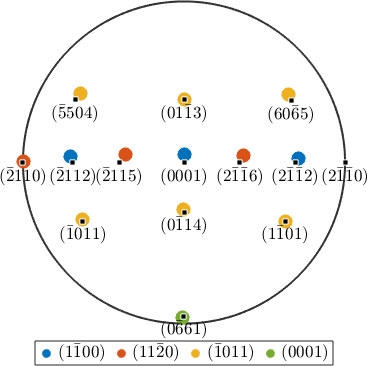
Misorientations
Misorientation, disorientation, twin relationships and their distributions.
6 pages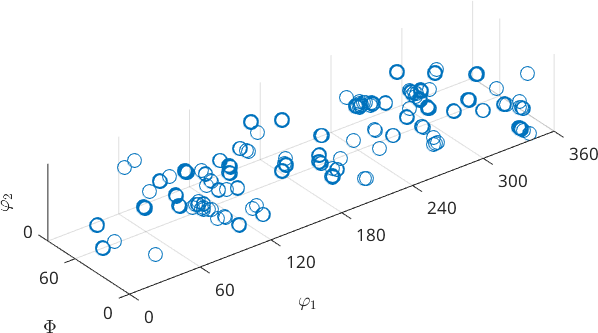
Texture
What an ODF, a pole figure and an inverse pole figure are.
6 pages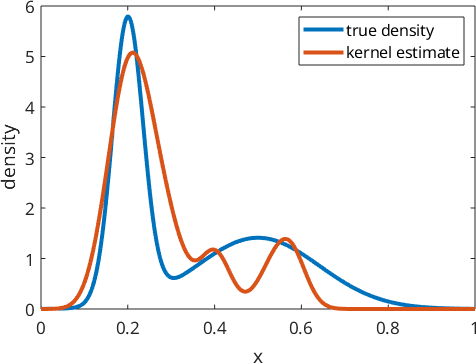
Density estimation and sampling
Density functions, halfwidth selection, sample size and sampling.
4 pages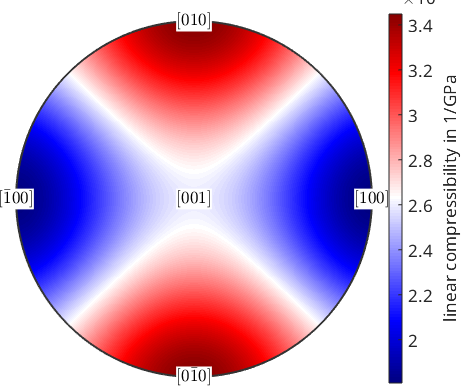
Anisotropic properties
Tensors and the elastic anisotropy of crystals and aggregates.
3 pages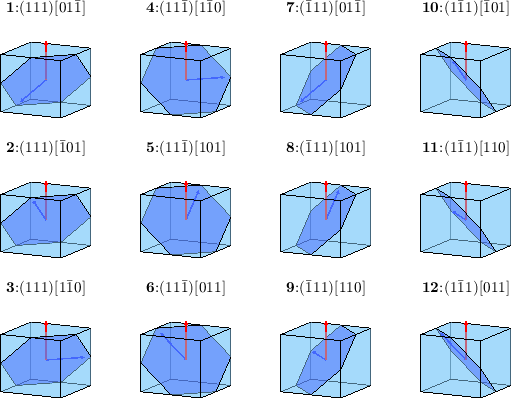
Deformation and transformation
Slip systems, the Schmid factor, dislocations and parent-child variants.
4 pagesMathematics
The functions and numerics underneath, for method developers.
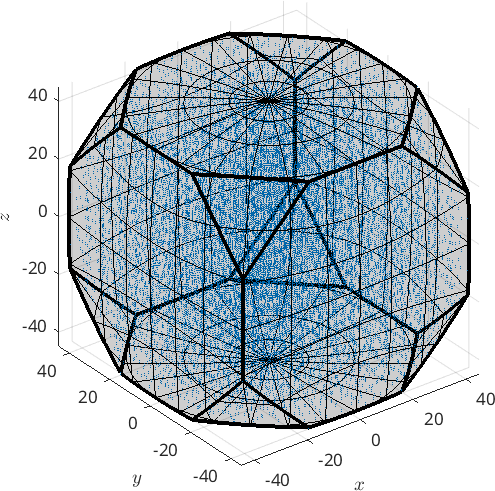
Mathematics: rotations
Representations, tangent spaces, embeddings and grids.
7 pages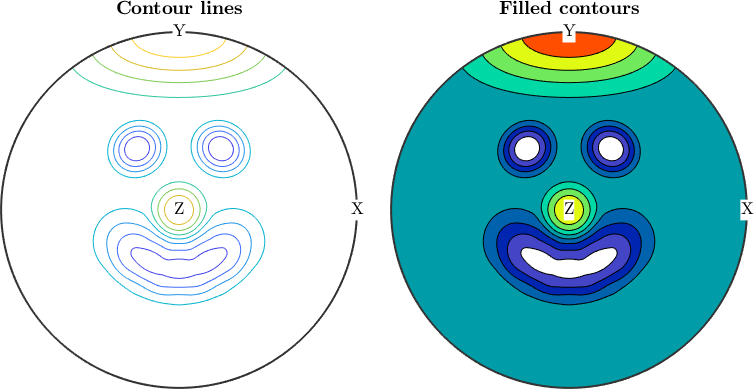
Mathematics: functions on the sphere
Spherical functions, harmonics, kernels, quadrature and vector fields.
15 pages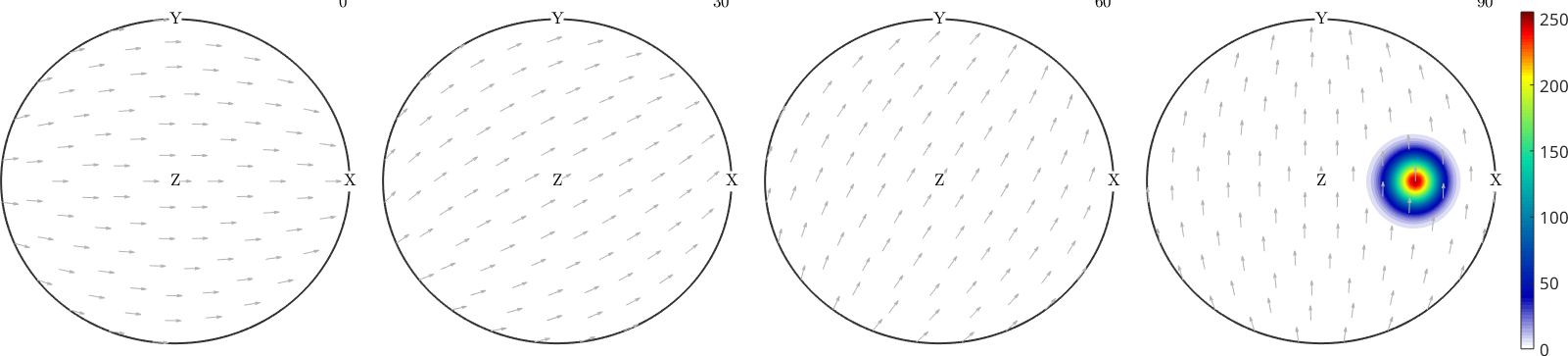
Mathematics: functions of orientations
Orientation functions, Wigner-D functions, kernels, approximation and quadrature.
18 pages